We have all been there: you have ten minutes before you need to leave the house and your battery icon is glaring red at 4%. In the past, this was a hopeless situation. But with the iPhone 16e, modern fast charging technology aims to solve exactly this problem.
However, plugging a cable into a wall doesn’t always guarantee speed. Fast charging is a specific interaction between your phone and the power source and getting it right requires the correct gear. Many users plug their new iPhone 16e into an old adapter and wonder why it’s taking hours to fill up.
This guide breaks down exactly how iPhone 16e fast charging works, stripping away the technical jargon to explain watts, volts and delivery protocols. We will also explore why the quality of your charger is just as important as the phone itself and why trusting experts like Campad Electronics ensures you get the speed you were promised.
What Fast Charging Actually Means
At its core, charging is about moving energy from an outlet into a battery. Think of it like filling a bucket with a hose. Standard charging (like the old 5W cubes Apple used to include) is like a garden hose at a trickle. It will fill the bucket eventually, but it takes a long time.
iPhone 16e fast charging is like opening the tap fully. It pushes more energy into the battery at a faster rate. But it isn’t just about raw power; it’s a smart conversation between the charger and the phone.
The iPhone 16e uses a standard called USB Power Delivery (USB-PD) via its USB-C port. When you plug it in, the phone “talks” to the charger. It asks, “How much power can you give me?” and the charger replies, “I can give you 20 watts.” If both agree, the fast charging begins.
This process isn’t linear. Fast charging is most effective when the battery is low. The iPhone 16e can gulp down power rapidly from 0% to 50%, usually in about 30 minutes. Once the battery reaches around 80%, the phone tells the charger to slow down. This “trickle charging” phase is crucial to prevent overheating and protect the long-term health of your battery chemicals.
Supported Charging Speeds
To unlock this speed, you need specific equipment. The iPhone 16e doesn’t just fast charge with any cable or plug.
The Magic Number: 20W
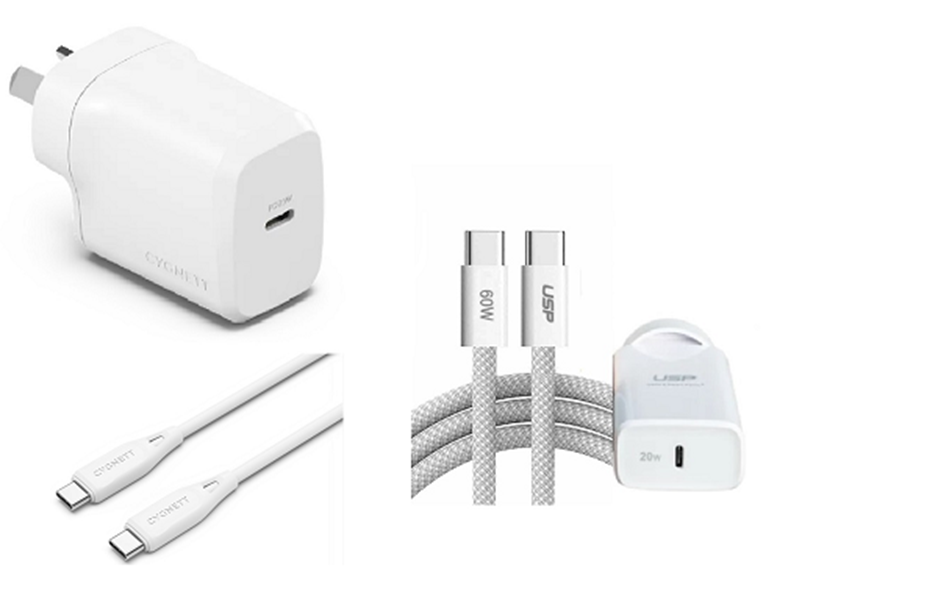
To achieve the advertised speed of 50% charge in 30 minutes, you need a power adapter capable of delivering at least 20 Watts (20W).
- Old Chargers (5W/10W/12W): If you reuse an old USB-A charger from an iPhone 7 or 11, it will charge your iPhone 16e, but at a snail’s pace. It cannot negotiate the higher speeds required for fast charging.
- The Sweet Spot (20W – 30W): A 20W USB-C adapter is the baseline for fast charging. Moving up to a 30W charger can offer slightly better consistency and efficiency, ensuring the phone always gets the maximum power it can handle, even if the phone gets warm.
- Overkill Chargers (60W+): You can safely use a higher wattage charger, like a MacBook brick (60W or 96W). The iPhone 16e will simply limit the intake to what it can handle (around 20-27W peak). It won’t charge faster than its internal limit, but it won’t explode either.
It is important to note that the “e” model focuses on these wired speeds via USB-C. While it supports wireless charging, standard Qi wireless is significantly slower (7.5W) compared to a wired fast charger for iPhone 16e.
Why Charger Quality Matters
With the market flooded with cheap charging bricks and gas station cables, it is tempting to buy the cheapest option. However, electricity is not something to gamble with. A low-quality charger can do more than just charge slowly; it can be dangerous.
Voltage Stability
High-quality chargers maintain a steady flow of power. Cheap knockoffs often have fluctuating voltage. These spikes and dips can confuse the iPhone’s power management chip, causing the charging process to stop and start or generating excessive heat that degrades the battery prematurely.
Safety Certifications
Reputable chargers undergo rigorous testing to ensure they don’t overheat or short-circuit. A generic, unbranded charger often skips these safety steps to cut costs. Using one risks frying the sensitive charging port on your new device.
The Cable Connection
The cable is the bridge. To support fast charging, you must use a USB-C to USB-C cable. But not all cables are built the same. A certified cable has proper shielding and wire gauge to handle the higher wattage current without overheating. A flimsy cable creates resistance, which turns energy into heat rather than battery percentage.
Trust the Experts at Campad Electronics
Understanding watts and amps can be boring, but protecting your phone isn’t. This is where Campad Electronics steps in. They aren’t just an online store; they are true industry veterans. Having supplied phone accessories to Australians since before the very first iPhone launched, they have seen the evolution from 30-pin connectors to Lightning and now to USB-C.
They know that a fast charger for iPhone 16e needs to be reliable, safe and certified. Campad Electronics curates a selection of chargers that are guaranteed to work seamlessly with Apple’s USB-PD standard. They test their products to ensure they deliver the advertised speeds without compromising safety.
When you buy from Campad Electronics, you are buying peace of mind. You get the confidence that your charger won’t ruin your battery health and that your cable will last longer than a few weeks. Whether you need a compact 20W wall plug for travel or a robust car charger for the commute, they have the high-quality options your iPhone 16e deserves.
Don’t let a bad charger hold you back. Get the speed you need with gear from Campad Electronics, the experts who have been powering Australians for over three decades.