Introduction: A Lobby Moment That Changed the Brief
A traveler pauses at the threshold; the room decides the story before anyone speaks. Reception Desks carry that story in the first glance, in the first touch of a hand on the counter. Data shows most visitors form a firm impression within seconds, and wear patterns reveal the truth of daily use in months. So here’s the question: why do so many front counters still age fast, wobble early, and sound hollow under stress (when the lobby needs calm)? Look at this scene—phones ring, bags scrape, carts roll—and ask: can the welcome point hold grace under load?

What follows maps that tension back to the material choices and the parts we often ignore—edge profiles, cable routing, and substrate fatigue. We’ll keep it simple, but not shallow—funny how that works, right? Let’s move from what we see to what we don’t, then compare the outcomes you can measure.
Under the Surface: Why Steel Fixes Problems We Pretended Were Style
Where do traditional counters fail?
The real pivot isn’t the polish; it’s the structure that never begs for attention. A stainless steel reception desk won momentum because it addresses failures that wood laminates and brittle composites hide until they don’t. Edges chip first. Seams swell next. Then the top flexes. Steel answers each point with a rigid load-bearing frame, tight tolerances, and edges that resist impact. Look, it’s simpler than you think: reduce porosity, reduce swelling; increase section rigidity, reduce sag. Add proper cable management and you cut clutter, which cuts snag points, which cuts damage. That chain matters in the real world.
Beyond durability, the user pain points are tactile and acoustic. Hollow counters drum under elbows; that noise drains focus. Stainless skins over dampening layers reduce the slap—less echo, more calm. Powder-coated panels shrug off fingerprints; anti-fingerprint finishes help too, but prep and micro-texture do the heavy lifting. And when housekeeping wheels in carts, a harder front fascia resists scuffs that would stain softer substrates. Even maintenance becomes linear: no swollen substrate, no re-edging, fewer emergency fixes. You also keep ADA knee-clearance intact because the undercarriage doesn’t sag. That steadiness turns into safer power access for chargers and small power converters—quiet wins that guests never mention, yet always feel.
Comparative Insight: The New Principles Behind a Calmer Welcome
What’s Next
Comparing old builds to modern assemblies shows a clear principle shift: engineered layers over raw bulk. Traditional counters rely on thickness for strength. Newer stainless designs use a thin, high-tensile shell on a braced core, so stiffness comes from geometry rather than mass. That means lighter install loads, fewer anchors, and better long-span control. When you fold the steel correctly, corner seams act like ribs. Add discrete grommets and a cable spine, and the work zone stays clean. In practice, the difference at front desk reception shows up as fewer snag repairs and faster nightly wipe-downs—minutes matter. And notice the human signal: low noise, no flex, no glare hotspots. Less distraction equals smoother greetings—an odd metric, but you can feel it. — and yes, that surprised us.
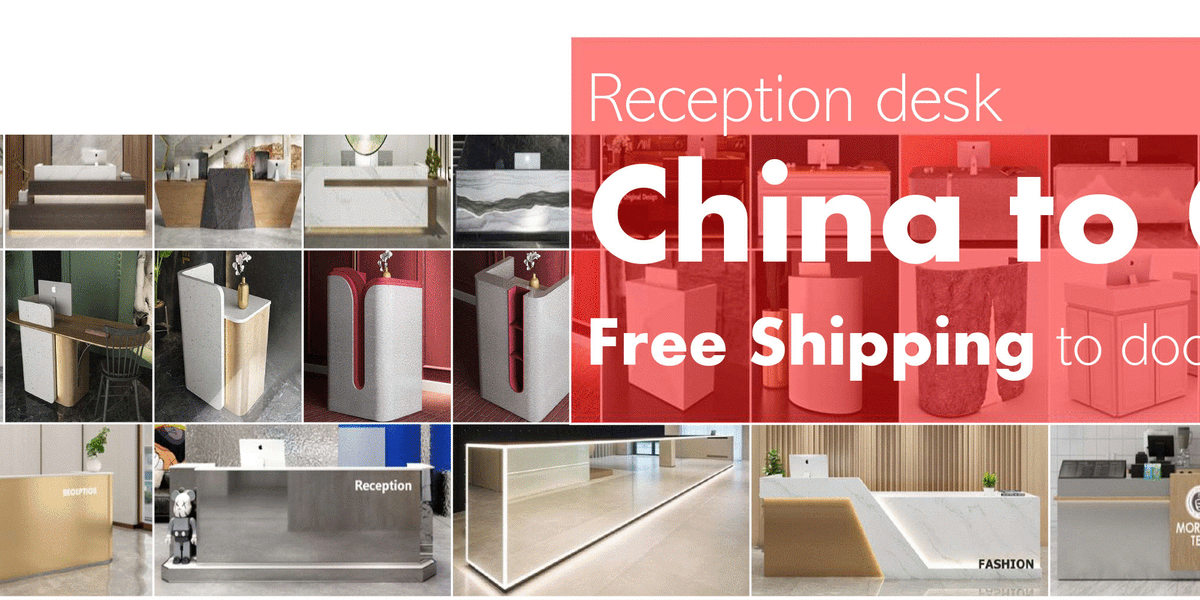
We can frame this forward-looking, too. Expect smarter integrations: LED task lines that don’t bleach sightlines, removable access panels for IT swaps, and modular kickplates to absorb scuffs. Expect better coatings that balance sheen with fingerprint resistance. Expect acoustic cores tuned for mid-frequency chatter. The summary is simple without being simplistic: rigidity lowers fatigue; surface science lowers upkeep; clean routing lowers risk. To choose well, use three checks: 1) Structural clarity—can the vendor show the frame path and fastener spec? 2) Service logic—are cable routes, access panels, and wear zones designed for 5-minute swaps? 3) Sensory control—how do finish, glare, and acoustic dampening behave during peak traffic? Measure those, and the lobby keeps its promise. Knowledge travels lighter when the counter does its job. M2-Retail